
Passing Down Mountain and Sea Craftsmanship, The Beauty of Objects — 9th Taiwan Indigenous Peoples Poster Biennial Exhibition
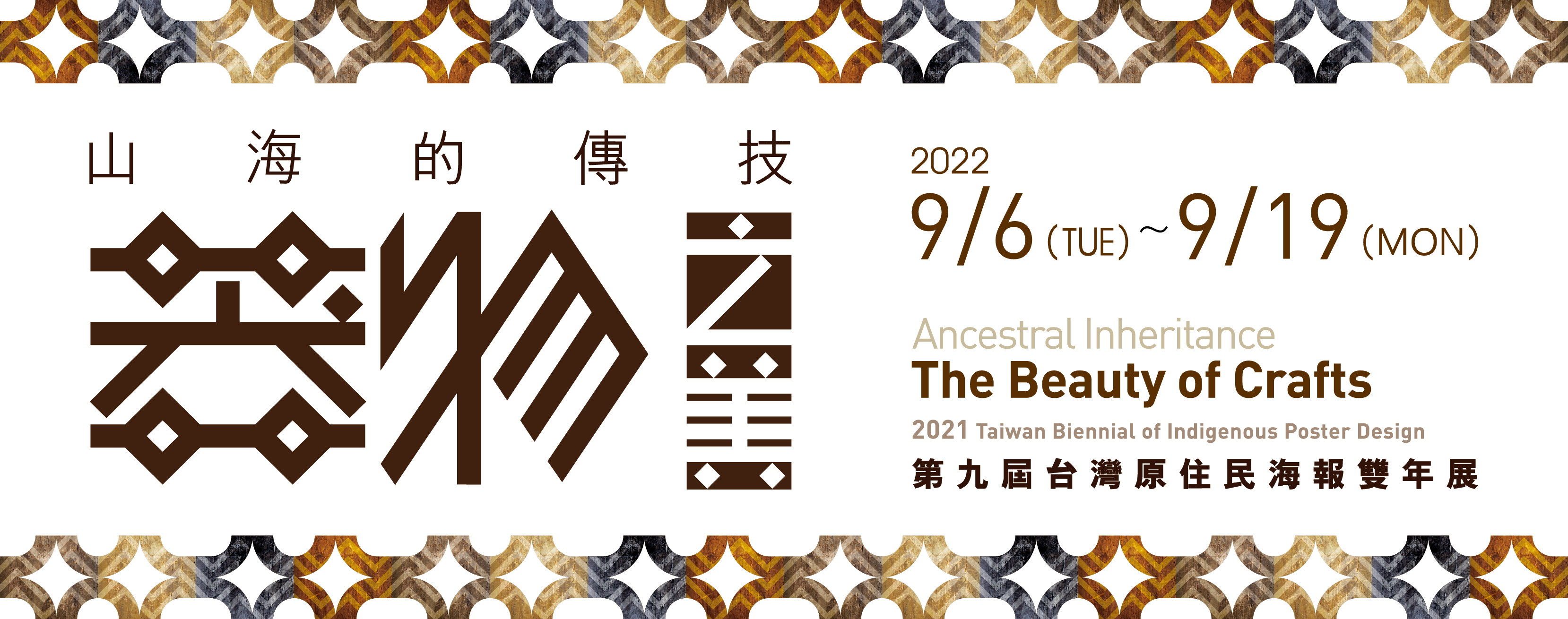
Exhibition Period|2022/09/06~09/19
Taiwan’s Indigenous peoples possess remarkable achievements in craft culture, particularly in pottery, carving, weaving, and other traditional arts. Among these, “objects” serve as one of the most direct ways to appreciate the beauty of craftsmanship. For example, the Tsou people are skilled in leather tanning techniques, creating clothing and hats from animal hides; the Amis people, traditionally engaged in agriculture and fishing, express their craftsmanship through woodworking, bamboo utensils, basket weaving, and refined fishing tools; Atayal hunters weave durable rattan hats and sturdy carrying baskets from strong yellow rattan; while for the Paiwan and Rukai peoples, ancient ceramic jars are treasured family heirlooms symbolizing power and social status. In traditional daily life, these “objects” were not merely tools created for practical needs, but also embodied social beliefs, cultural traditions, material lifestyles, craft techniques, and aesthetic values of Indigenous communities.
This year, the competition formerly known as the “National Student Taiwan Indigenous Peoples Poster Design Competition” was officially renamed the “Taiwan Indigenous Peoples Poster Biennial Exhibition.” The eligibility requirements were also expanded from students in Taiwan to participants of all nationalities and ages. Through this transformation, the organizers hoped to further deepen and broaden the diversity and quality of submissions, while encouraging participants to gain a deeper understanding of Taiwan’s Indigenous cultures during the creative process. Through artistic exchange and mutual inspiration, new sparks of creativity could emerge.
In addition to being exhibited at the NTUT Arts Center, the exhibition also received enthusiastic support from cultural centers and campuses throughout Taiwan. Furthermore, it was invited to exhibit internationally at institutions such as the University of California, Berkeley and the Phoebe A. Hearst Museum of Anthropology. Expanding beyond Taiwan and reaching a global audience, the exhibition not only provided valuable international exposure for award-winning creators, but also marked an important step forward in promoting Taiwanese Indigenous cultures and increasing their international visibility.
Exhibition Highlights