
Exhibition Period|2017/09/04~09/30
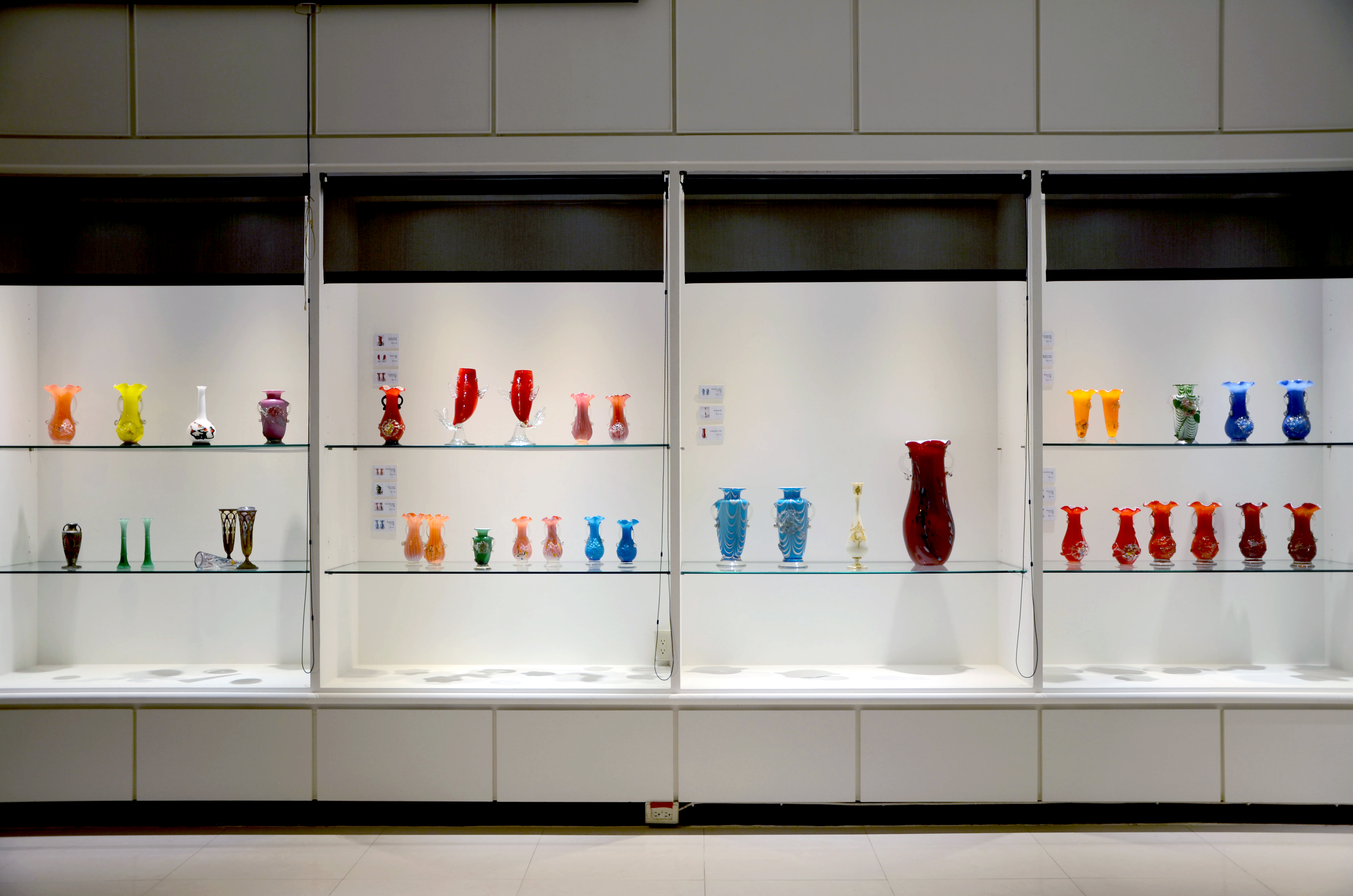
The evolution of Taiwanese glass craftsmanship began in 1887 (the 14th year of the Guangxu Emperor's reign) when Chen Liang-cheng established the island's first glass factory in Taipei, tracing a history of approximately 130 years. During the first half of the twentieth century, if one were to categorize everyday vernacular utensils by material, glass easily stood out as the most diverse in variety and the most widespread in daily use. The glass flower vessels showcased in this special exhibition represent pieces collected or used by the Taiwanese public during this fifty-year period. Unconfined by geographic origins, the selection also includes imported Japanese and Western glassworks. The gallery features a curated assemblage of 101 vessels, predominantly freestanding upright vases, supplemented by a select few wall-mounted containers and shallow water basins (suiban). During this era, the usage of flower vases in Taiwan was deeply rooted in folk beliefs and traditional customs. A standard ritual altar required a mandatory pair of vases as sacred offering vessels, while marriage customs dictated that the bride’s dowry include a matching pair. Within these spiritual and cultural frameworks, the vase served as a sacred and auspicious emblem of the people's inner worlds, establishing a shared aesthetic consensus between market supply and public demand. Although Taiwan’s domestic glass production lagged behind its Japanese and Western counterparts in both technical maturity and artistic sophistication, these everyday utilitarian vessels faithfully mirror the foundational technical thresholds and popular aesthetic standards of Taiwan's nascent glass industry. The "Peony Vase," for instance, emerged as the most iconic and fashionable style symbolizing localized Taiwanese identity at the time. Imbued with deep cultural context, symbolic meaning, beauty, and practicality, these diverse silhouettes serve as invaluable tangible documentation of contemporary Taiwanese craft history. Due to their fragile nature and a historical lack of public appreciation for glass craft, compiling a material archive of glass artifacts is exceptionally challenging. The center is profoundly privileged to bring together such a stellar collection of exquisite glass vessels. Beyond reconstructing historical memory and advancing cultural heritage preservation, this exhibition invites viewers to contemplate contemporary lifestyle aesthetics through these period relics, ultimately revitalizing the legacy of glass craft and weaving this refined culture back into the fabric of everyday life.
Performance Highlights